Amazon Science - A centralized platform to simplify the paper submission and review process
Overview
80% of Amazon’s internal science events relied on fragmented, manual workflows—email chains and Excel trackers, resulting in missed deadlines and significant administrative overhead.
I led the UX strategy to transform these manual tasks into a centralized digital platform. The new system streamlines the entire conference lifecycle from paper submission to peer review, simplifying workflows for authors, reviewers, and organizers.
Timeframe
Eight months
my role
Lead UX Designer
Impact
$150K annually
Projected savings in third-party licensing fees.
$650K labor hours
Saving by automating manual tracking.
7 conferences
Onboarded and more to come
The Challenge: Fragmented Science Workflows
Amazon’s internal science community hosts hundreds of events annually, yet 80% of these events rely on fragmented, manual processes.
Manual processes: Event organizers and authors relied on disjointed email chains, PDF uploads, and manual tracking via Excel sheets.
The Risk: The lack of a unified system led to frequent missed deadlines, version control confusion, and administrative overhead.
The Opportunity:
To build a centralized platform that simplifies the submission and review process, reduces admin work, and scales to support increasing submission volumes.
Process: Mapping the Ecosystem
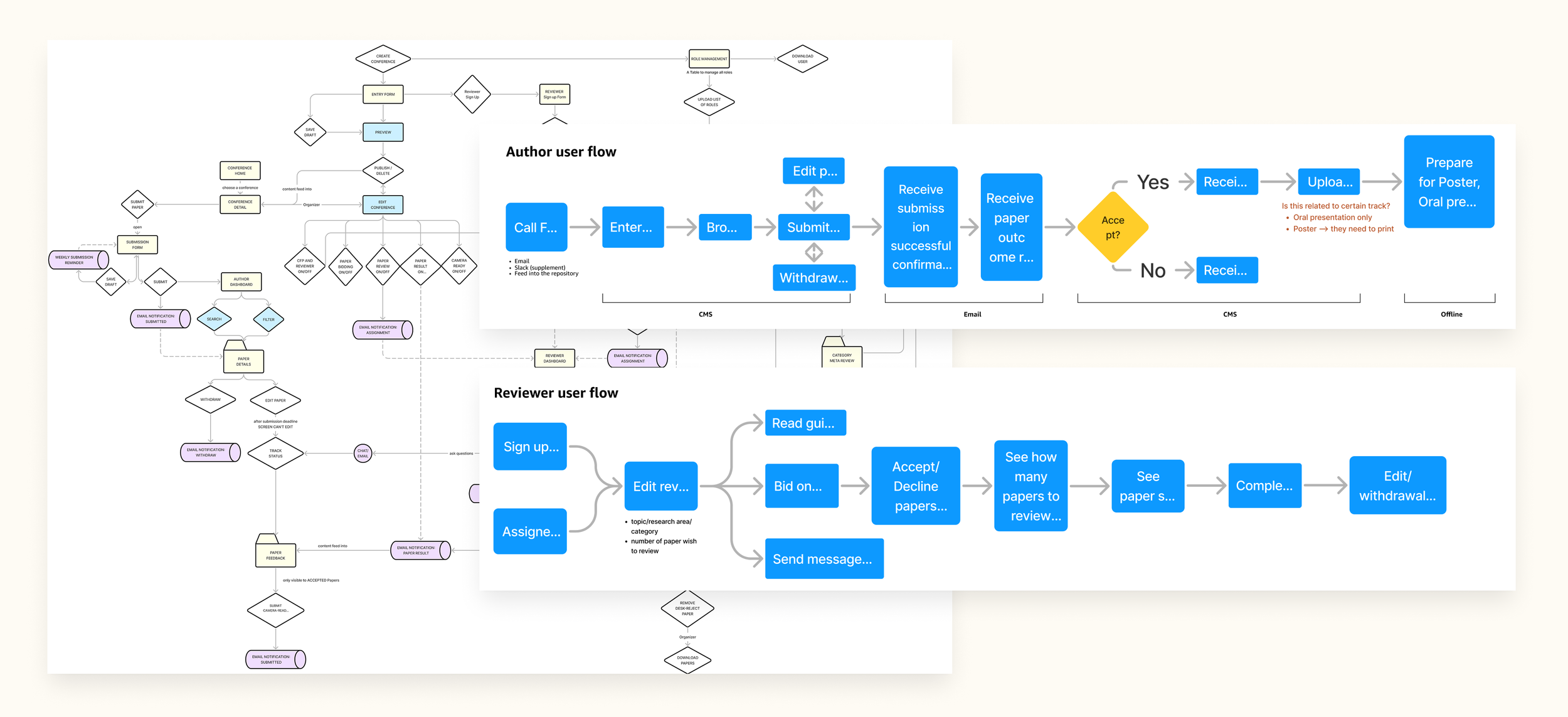
Establishing the Information Architecture (IA): Since no previous system or workflow existed, I developed the entire IA to support four distinct user roles: Authors, Reviewers, Area Chairs, and Event Organizers.
Defining Complex Workflows: I mapped out the end-to-end logic for every user interaction—from abstract submission concepts to linear digital flows. This ensured that the complex relationships between roles (e.g., a Reviewer providing feedback that an Author then acts on) were functionally sound before any visual design began.
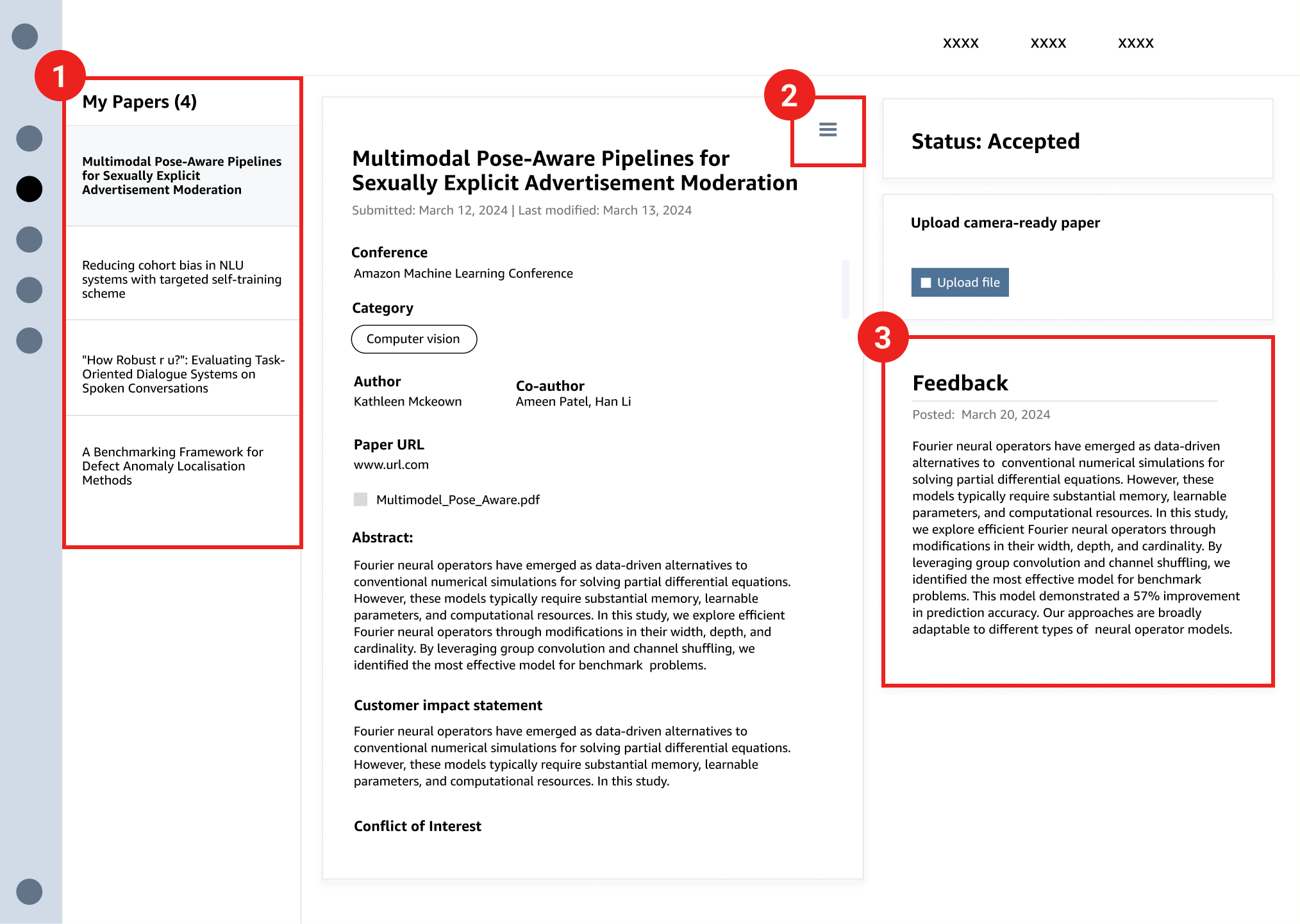
I started with low-fidelity wireframes to validate assumptions early. A key challenge was the "My Papers" detail page for authors, where users track acceptance status and receive feedback.
The Iteration Process
Through user testing, we uncovered three critical usability issues in the initial concept:
Navigation Scaling: The left-hand navigation broke down when authors submitted 20+ papers.
Hidden Actions: Users struggled to find key actions (Edit/Withdraw) hidden behind a "hamburger" menu myth.
Feedback Overload: The original layout failed to handle multiple rounds of feedback from different reviewers.
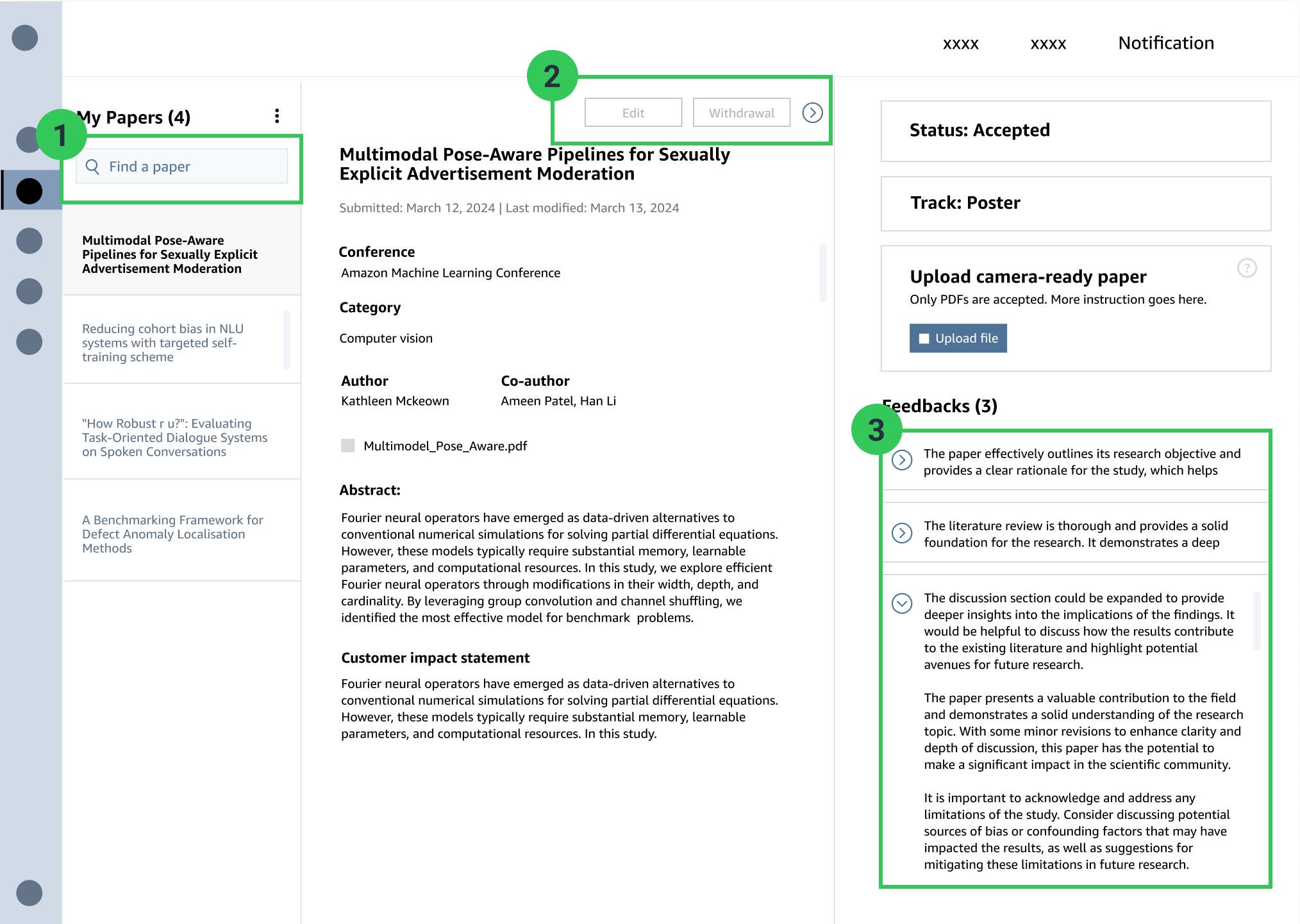
The Solution:
Search & Filter: Replaced the sidebar with a robust search and filter system.
Exposed Actions: Surfaced "Edit" and "Withdraw" as primary buttons to improve task completion rates.
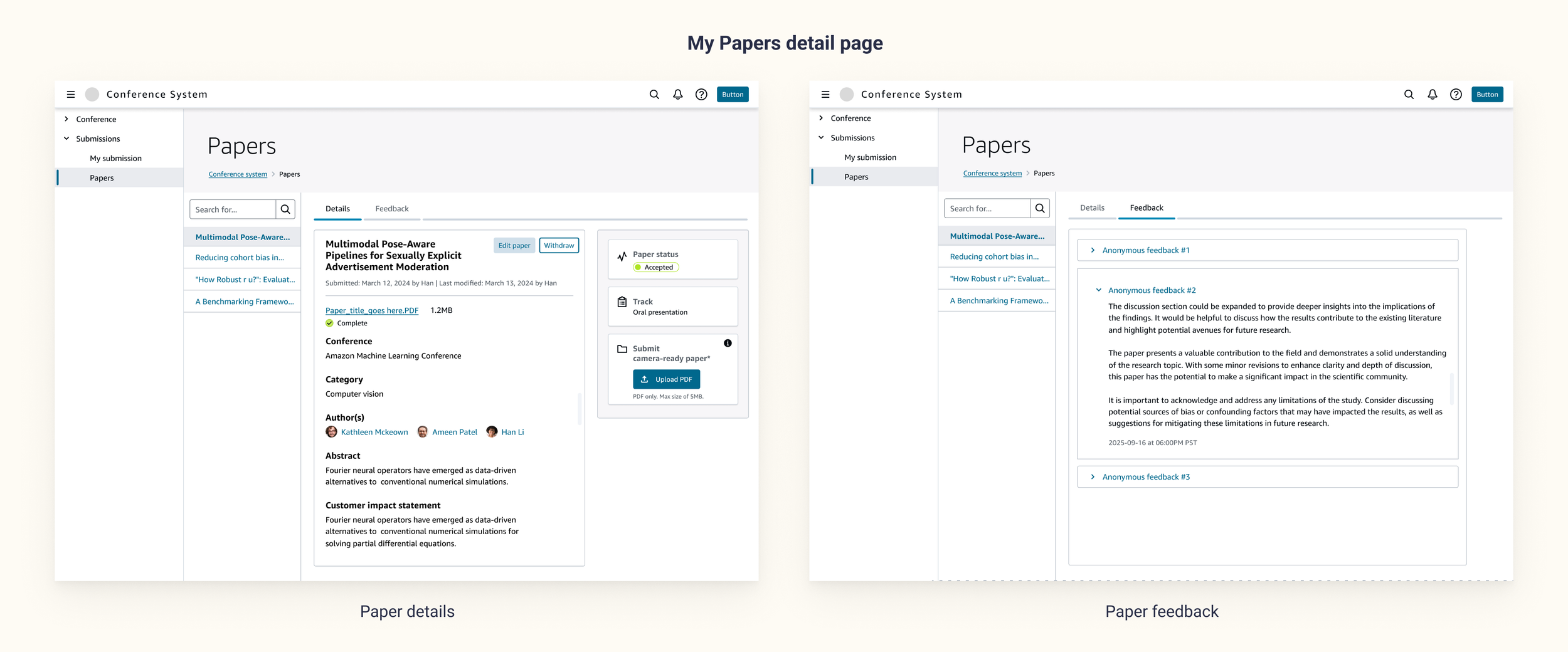
Scalable Feedback UI: Introduced a tabbed interface and collapsible panels to organize reviewer feedback, keeping the User Interface (UI) clean regardless of the volume of text.
A Unified Platform
Using the Amazon Meridian Design System, I delivered high-fidelity mockups that streamlined the experience for every role.
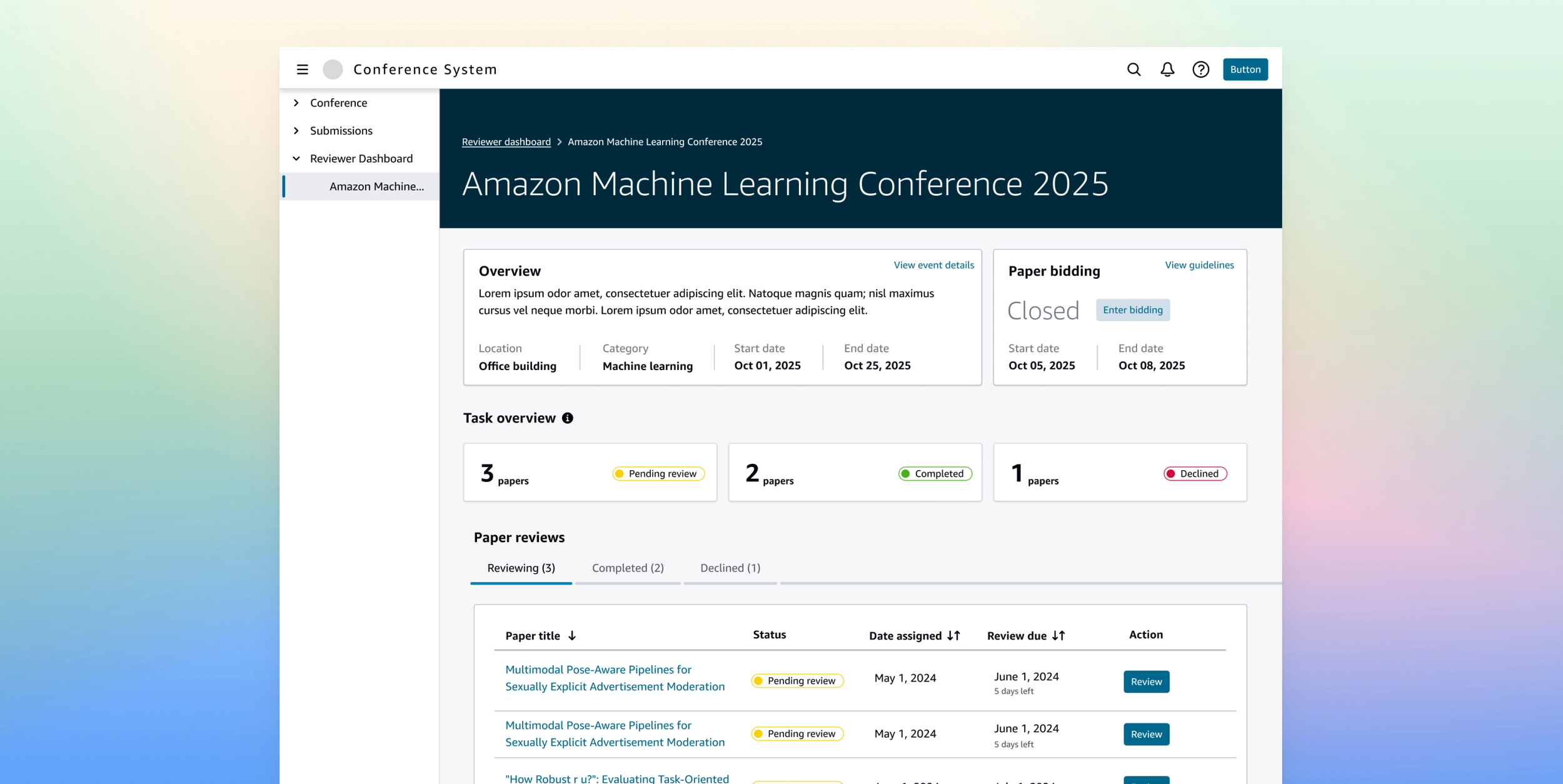
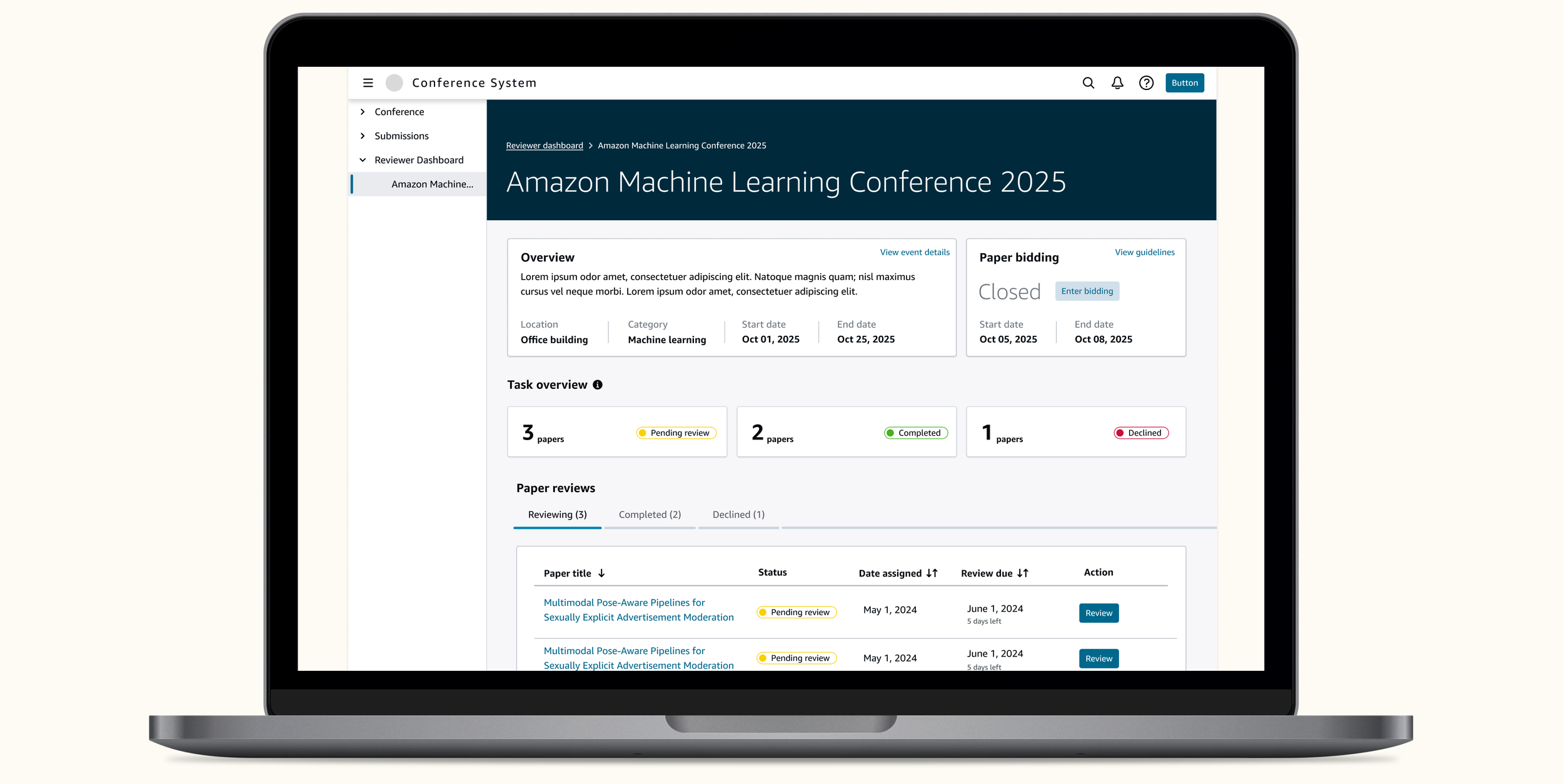
Reviewer Dashboard: Designed to minimize context switching. Reviewers can now see pending tasks, due dates, and paper status at
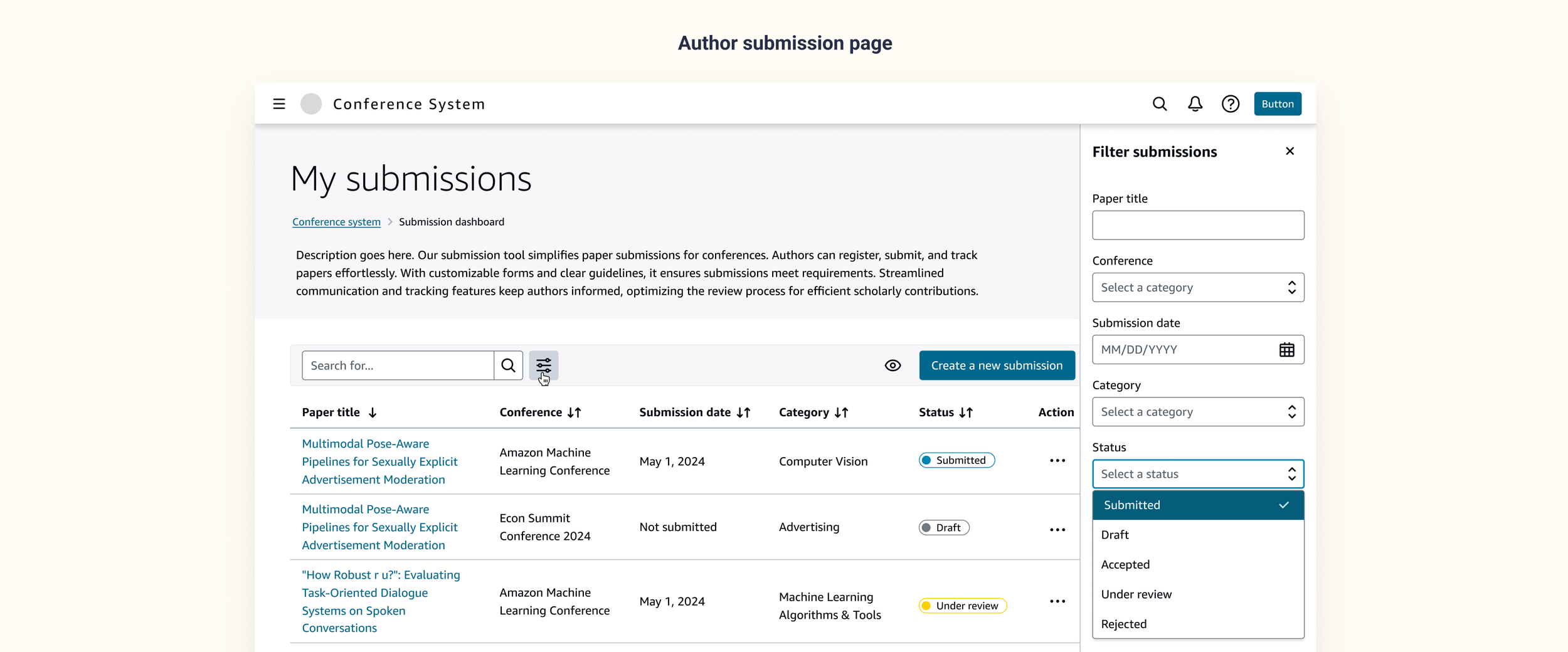
Author Hub: A centralized dashboard where authors can track submissions across multiple conferences in real-time.
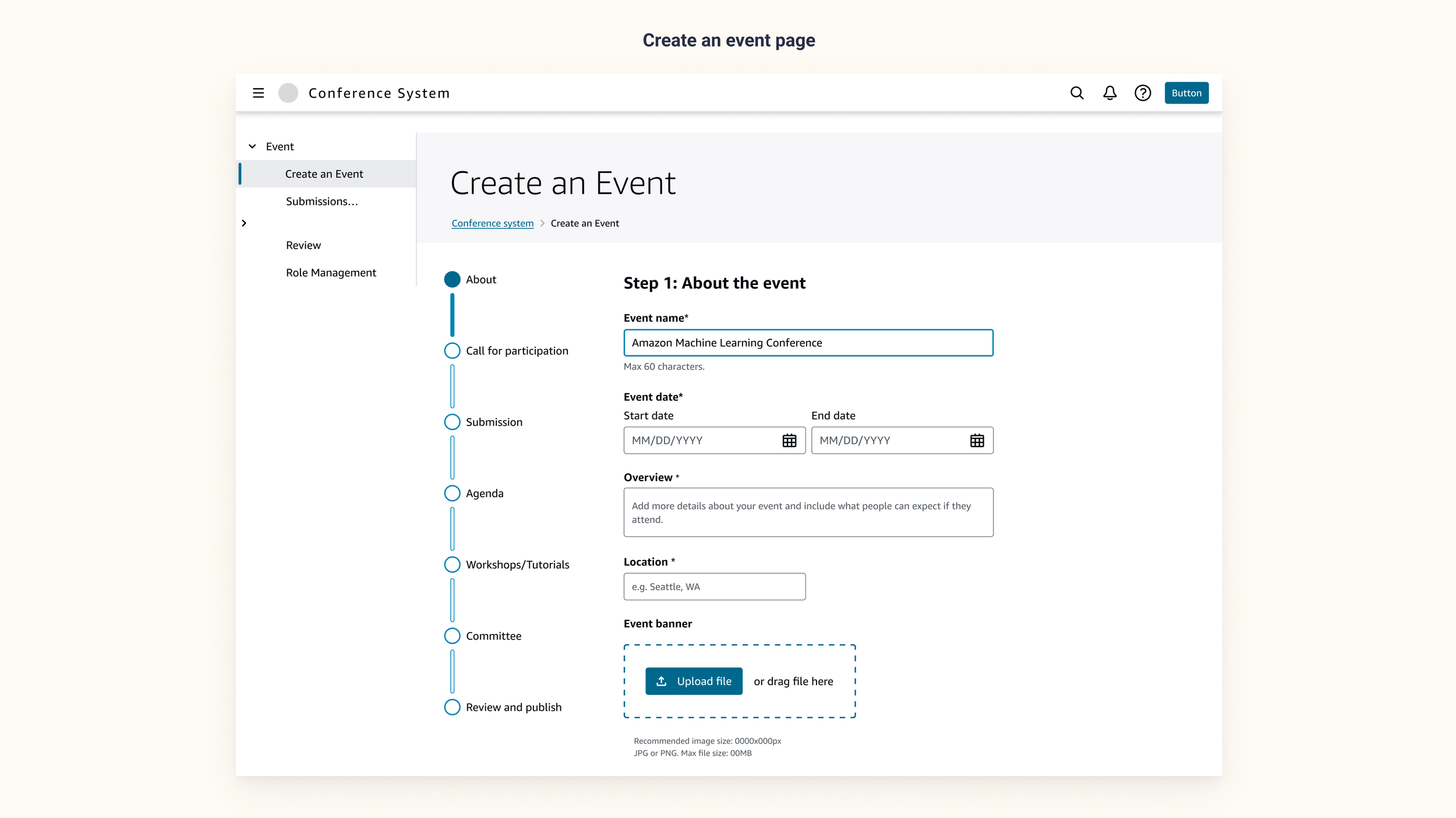
Event Creation: Replaced static internal company Wiki pages and spreadsheets with a dynamic "Create Event" flow, allowing organizers to launch conferences in minutes.